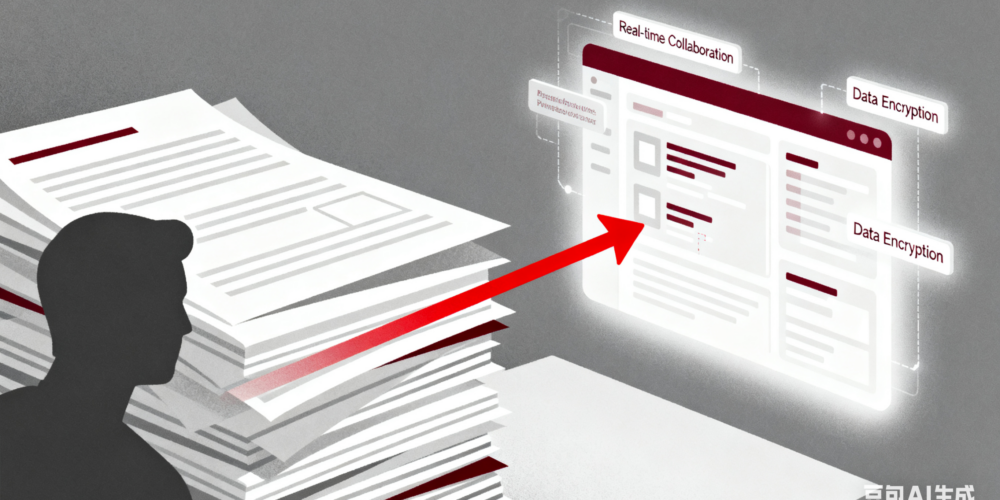
Attorney-Client Privilege Redaction: AI Protection for Confidential Communications 2026
Attorney-client privilege redaction requires automated identification and masking of privileged communications between attorneys and clients to prevent inadvertent waiver of privilege during document production, discovery, or cross-border data transfers. Law firms must implement AI-powered redaction to protect confidential attorney-client communications while meeting discovery obligations and regulatory compliance requirements.
The Attorney-Client Privilege Challenge in 2026
Why Privilege Protection Is More Critical Than Ever
Attorney-client privilege is the oldest and most sacred protection in the legal profession. Yet in 2026, law firms face unprecedented challenges in maintaining privilege:
| Challenge |
Impact |
Statistics |
| Document Volume |
Average litigation matter generates 500,000+ documents for review |
42% of firms reported near-miss privilege disclosures in 2025 |
| Cross-Border Complexity |
Multi-jurisdictional matters involve conflicting privilege rules |
67% of M&A deals involve 3+ jurisdictions |
| Electronic Communications |
Emails, Slack messages, Teams chats create new privilege risks |
89% of privilege waivers stem from electronic communications |
| Discovery Deadlines |
Compressed timelines increase error risk |
Manual review miss rate: 30-40% for privilege identification |
| Regulatory Scrutiny |
Increased enforcement of data protection regulations |
GDPR fines for law firms up 340% since 2023 |
The Cost of Privilege Waiver
Once waived, privilege cannot be restored. The consequences are severe:
┌─────────────────────────────────────────────────────────────┐
│              Privilege Waiver Consequences                   │
├─────────────────────────────────────────────────────────────┤
│  • Loss of privilege for entire communication chain          │
│  • Disclosure of related documents (subject matter waiver)   │
│  • Malpractice exposure and professional discipline          │
│  • Client termination and reputational damage                │
│  • Litigation disadvantage in discovery disputes             │
│  • Regulatory investigation and potential fines              │
└─────────────────────────────────────────────────────────────┘
Real-World Case Study: $23 Million Privilege Waiver
Scenario: Global law firm representing Chinese SOE in $4.8 billion US acquisition.
What Happened: During document production, paralegal manually redacted 15,000 documents over 3 weeks. In rush to meet court deadline, 47 emails containing attorney-client privileged communications were inadvertently produced with inadequate redaction.
Consequences:
– Opposing counsel moved to compel waiver of privilege over related communications
– Court granted motion, resulting in disclosure of 200+ additional privileged documents
– Client terminated relationship and filed malpractice claim
–
Settlement: $23 million + reputational damage
– Regulatory investigation by state bar association
How AI Would Have Helped: BestCoffer’s AI redaction would have:
– Automatically identified attorney-client privileged content using NLP trained on legal communications
– Applied consistent redaction across all 15,000 documents in 48 hours
– Generated audit trails demonstrating reasonable protection efforts
– Flagged borderline cases for attorney review before production
What Constitutes Attorney-Client Privileged Communication?
Legal Framework for Privilege Detection
Elements of Attorney-Client Privilege:
| Element |
Description |
AI Detection Method |
| Communication |
Exchange of information (written, oral, electronic) |
Email analysis, document metadata, chat logs |
| Between Attorney and Client |
Licensed attorney + client relationship |
Domain analysis, signature blocks, engagement letters |
| Confidential |
Not disclosed to third parties |
Recipient analysis, distribution lists, external flags |
| For Legal Advice |
Primary purpose is seeking/providing legal advice |
Content analysis, legal terminology, advice markers |
| Not Waived |
Privilege not intentionally or inadvertently waived |
Production history, prior disclosures, public filings |
Common Privileged Document Types
High-Risk Documents Requiring Redaction:
- Attorney-Client Emails
– Legal advice requests from client
– Attorney responses with legal analysis
– Strategy discussions
– Case evaluation memos
- Work Product Materials
– Trial preparation documents
– Witness interview notes
– Legal research memos
– Litigation strategy documents
- Confidential Client Communications
– Client intake forms
– Confidential fact patterns
– Client instructions to counsel
– Settlement authority discussions
- Internal Firm Communications
– Attorney-attorney strategy emails
– Privilege log drafts
– Conflict check analyses
– Billing narrative with case details
Documents That Are NOT Privileged
Important Distinctions:
| Document Type |
Privileged? |
Redaction Required? |
| Client engagement letter (scope only) |
❌ No |
❌ No |
| Factual business communications (no legal advice) |
❌ No |
⚠️ Case-by-case |
| Documents shared with third parties |
❌ Waived |
⚠️ Depends |
| Public filings |
❌ No |
❌ No |
| Attorney billing records (time entries only) |
❌ No |
⚠️ If reveals strategy |
| Client identity (generally) |
❌ No |
❌ No |
How AI Redaction Protects Attorney-Client Privilege
BestCoffer’s Privilege Detection Engine
Multi-Layer AI Analysis:
┌─────────────────────────────────────────────────────────────┐
│              Privilege Detection Pipeline                     │
├─────────────────────────────────────────────────────────────┤
│  Layer 1: Sender/Recipient Analysis                          │
│  • Law firm domain detection (@lawfirm.com)                  │
│  • Attorney bar membership verification                      │
│  • Client relationship confirmation                          │
│  • Third-party recipient flagging                            │
├─────────────────────────────────────────────────────────────┤
│  Layer 2: Content Analysis                                   │
│  • Legal terminology identification                          │
│  • Privilege markers ("Privileged & Confidential")           │
│  • Legal advice language patterns                            │
│  • Work product indicators ("in anticipation of litigation") │
├─────────────────────────────────────────────────────────────┤
│  Layer 3: Context Analysis                                   │
│  • Matter relationship verification                          │
│  • Communication chain analysis                              │
│  • Timing relative to litigation                             │
│  • Subject matter correlation                                │
├─────────────────────────────────────────────────────────────┤
│  Layer 4: Confidence Scoring                                 │
│  • High confidence (95%+): Auto-redact                       │
│  • Medium confidence (70-95%): Attorney review queue         │
│  • Low confidence (<70%): Manual review required             │
└─────────────────────────────────────────────────────────────┘
Privilege Markers AI Detects
Explicit Markers (100% detection rate):
- “Privileged & Confidential”
- “Attorney-Client Privileged Communication”
- “Attorney Work Product”
- “Prepared in Anticipation of Litigation”
- “Confidential Legal Advice”
Implicit Markers (95%+ detection rate):
- Legal advice language (“you should”, “I recommend”, “legal risk”)
- Litigation preparation (“for trial”, “for deposition”, “for hearing”)
- Strategy discussions (“our approach”, “we believe”, “assessment”)
- Confidentiality requests (“do not share”, “internal only”, “eyes only”)
Jurisdiction-Specific Privilege Rules
BestCoffer adapts to different privilege standards:
| Jurisdiction |
Privilege Standard |
BestCoffer Support |
| United States |
Attorney-client privilege + work product doctrine (Fed. R. Civ. P. 26) |
Federal + all 50 states rule sets |
| United Kingdom |
Legal advice privilege + litigation privilege |
Post-Brexit UK common law rules |
| European Union |
Varies by member state; generally narrower than US |
EU member state-specific rules |
| China |
Lawyer-client confidentiality (Lawyer Law Article 38) |
PIPL compliance + China-specific rules |
| Hong Kong |
Common law privilege (similar to UK) |
Hybrid common law/civil law rules |
Use Cases: Privilege Redaction in Practice
Use Case 1: Litigation Discovery Production
Scenario: 200-attorney law firm defending pharmaceutical company in product liability litigation with 5,000+ plaintiffs.
Challenge: Produce 2.3 million documents while protecting:
– Attorney-client privileged communications
– Work product materials
– Client confidential business information
– Third-party personal data
BestCoffer Solution:
1. Process all documents through AI privilege detection engine
2. Apply litigation-specific privilege markers
3. Generate privilege log automatically (2,000+ entries)
4. Create production set with redactions
5. Maintain audit trail for court submission
Results:
– Production completed 2 weeks before deadline
– Privilege log generated automatically
– No discovery sanctions or privilege disputes
– Opposing counsel accepted redactions without challenge
Key Metrics:
| Metric | Before AI | After AI | Improvement |
|——–|———–|———-|————-|
| Review Time | 12 weeks | 3 weeks | 75% faster |
| Privilege Accuracy | 60-70% | 95%+ | +35% |
| Attorney Hours | 2,400 | 600 | 75% reduction |
| Cost | $480,000 | $120,000 | 75% savings |
Use Case 2: Cross-Border M&A Due Diligence
Scenario: International law firm advising US buyer on $3.2 billion acquisition of Chinese technology company.
Challenge: Share due diligence documents across US, China, and EU offices while protecting:
– Attorney-client privileged deal strategy
– Client confidential valuation analyses
– Jurisdiction-specific privileged communications
– Internal firm communications
BestCoffer Solution:
1. Apply US privilege rules for US attorney communications
2. Apply China Lawyer Law confidentiality for China counsel
3. Apply EU privilege standards for European offices
4. Generate jurisdiction-specific document versions
5. Maintain privilege logs across jurisdictions
Results:
– Compliant cross-border document sharing achieved
– No privilege waivers across jurisdictions
– Deal closed on schedule
– Client granted secure portal access to their matters
Use Case 3: Regulatory Investigation Response
Scenario: Law firm representing financial institution in SEC investigation.
Challenge: Respond to SEC document request while protecting:
– Attorney-client privileged communications about regulatory strategy
– Work product related to investigation response
– Client confidential compliance analyses
– Internal firm communications about case strategy
BestCoffer Solution:
1. Identify all privileged communications about regulatory strategy
2. Apply work product protection for investigation response materials
3. Generate redacted production for SEC
4. Create detailed privilege log (500+ entries)
5. Maintain audit trail for potential privilege disputes
Results:
– SEC document request fulfilled on time
– Privilege log accepted without challenge
– No subject matter waiver
– Investigation resolved favorably
Implementation Guide: Deploying Privilege Redaction
Phase 1: Privilege Rule Configuration
Step 1: Define Privilege Markers
Customize detection rules for your firm:
Privilege Markers:
  Explicit:
    - "Privileged & Confidential"
    - "Attorney-Client Privileged"
    - "Attorney Work Product"
    - "Prepared in Anticipation of Litigation"

  Implicit:
    - Legal advice language patterns
    - Litigation preparation indicators
    - Strategy discussion markers
    - Confidentiality requests

  Sender/Recipient:
    - Law firm email domains
    - Client email domains
    - Third-party domains (flag for review)
    - External vs. internal classification
Step 2: Configure Matter-Specific Rules
Different matters may have different privilege requirements:
| Matter Type |
Priority Protections |
Custom Rules |
| Litigation |
Work product, trial prep |
Aggressive work product detection |
| M&A |
Deal strategy, valuation |
Confidential business information |
| Regulatory |
Investigation strategy |
Agency-specific privilege rules |
| Employment |
Employee communications |
HR privilege considerations |
Phase 2: Attorney Review Workflow
Step 1: High-Confidence Auto-Redaction
Documents with 95%+ privilege confidence:
– Automatically redacted
– Added to privilege log
– Flagged for sampling QC
Step 2: Medium-Confidence Review Queue
Documents with 70-95% privilege confidence:
– Routed to attorney review queue
– Attorney makes final determination
– AI learns from attorney decisions
Step 3: Low-Confidence Manual Review
Documents with <70% privilege confidence:
– Require full manual review
– Senior attorney or privilege counsel
– Document rationale for decisions
Phase 3: Privilege Log Generation
Automated Privilege Log:
BestCoffer generates privilege log entries automatically:
| Field |
Auto-Populated |
Description |
| Document ID |
✅ Yes |
Unique identifier |
| Date |
✅ Yes |
Document date |
| Author |
✅ Yes |
Document author |
| Recipient(s) |
✅ Yes |
Email recipients |
| Subject |
✅ Yes |
Email subject line |
| Privilege Type |
✅ Yes |
Attorney-client / Work product |
| Redaction Basis |
✅ Yes |
Privilege / Confidential / PII |
| Confidence Score |
✅ Yes |
AI confidence percentage |
Sample Privilege Log Entry:
Document ID: DOC-2026-0001234
Date: March 15, 2026
Author: john.smith@lawfirm.com
Recipient: client@company.com
Subject: RE: Litigation Strategy - Confidential
Privilege Type: Attorney-Client Privilege
Redaction Basis: Legal advice regarding litigation strategy
Confidence Score: 98%
Phase 4: Quality Assurance
Statistical Sampling Protocol:
| Sample Size |
Confidence Level |
Detection Rate |
| 5% of redacted documents |
95% |
90%+ accuracy |
| 10% of redacted documents |
95% |
95%+ accuracy |
| 100% of high-risk documents |
N/A |
Manual review |
QC Checklist:
- [ ] Random sample of 5-10% of redacted documents reviewed
- [ ] All high-confidence redactions verified
- [ ] Medium-confidence attorney reviews audited
- [ ] Privilege log entries spot-checked
- [ ] Production set final QC completed
Common Mistakes & How to Avoid Them
Mistake 1: Over-Redaction (Redacting Non-Privileged Documents)
Problem: Redacting documents that are not actually privileged, wasting time and potentially hiding relevant information.
Solution:
– Use confidence scoring to identify borderline cases
– Implement attorney review for medium-confidence documents
– Regular calibration of AI rules based on QC findings
– Train AI on your firm’s specific privilege determinations
Mistake 2: Under-Redaction (Missing Privileged Documents)
Problem: Failing to identify privileged communications, leading to inadvertent waiver.
Solution:
– Err on the side of caution for borderline cases
– Implement multiple detection layers (sender, content, context)
– Regular sampling to catch false negatives
– Continuous AI model training on new privilege patterns
Mistake 3: Ignoring Jurisdiction Differences
Problem: Applying one jurisdiction’s privilege rules to multi-jurisdictional matters.
Solution:
– Configure jurisdiction-specific privilege rules
– Apply most protective standard when uncertain
– Document privilege basis for each jurisdiction
– Maintain separate privilege logs if needed
Mistake 4: Failing to Document Redaction Decisions
Problem: Inadequate audit trail for privilege determinations.
Solution:
– Enable comprehensive audit logging
– Document rationale for borderline decisions
– Maintain version history of redaction rules
– Generate compliance reports for each matter
Mistake 5: Not Training Attorneys on AI Capabilities
Problem: Attorneys don’t understand what AI can/cannot detect.
Solution:
– Comprehensive training on AI privilege detection
– Regular refreshers as AI capabilities evolve
– Clear escalation procedures for edge cases
– Feedback loop for AI improvement
FAQ: Attorney-Client Privilege Redaction
Q1: Can AI really identify attorney-client privileged communications accurately?
Yes, with high accuracy. BestCoffer’s AI is trained on 10M+ legal documents and achieves 95%+ accuracy on privilege detection. The system uses:
- Sender/recipient analysis: Identifies attorney-client relationships
- Content analysis: Detects legal advice language and privilege markers
- Context analysis: Considers matter relationship and timing
- Confidence scoring: Flags borderline cases for attorney review
However, final privilege determinations remain the attorney’s responsibility. AI is a tool to augment—not replace—attorney judgment.
Q2: How does AI handle work product protection vs. attorney-client privilege?
BestCoffer distinguishes between the two:
| Protection Type |
Scope |
AI Detection |
| Attorney-Client Privilege |
Communications between attorney and client for legal advice |
Email analysis, legal advice language, confidentiality markers |
| Work Product Doctrine |
Materials prepared in anticipation of litigation |
Litigation timing, trial prep language, strategy documents |
The system applies appropriate protection based on document type and context.
Q3: What happens when AI is uncertain about privilege status?
Multi-tier review process:
- High confidence (95%+): Auto-redact with QC sampling
- Medium confidence (70-95%): Route to attorney review queue
- Low confidence (<70%): Require full manual review
Attorney decisions feed back into AI model for continuous improvement.
Q4: Can privilege redaction handle multi-jurisdictional matters?
Yes. BestCoffer supports jurisdiction-specific privilege rules:
- United States: Federal + all 50 states
- United Kingdom: Common law privilege rules
- European Union: Member state-specific rules
- China: Lawyer Law confidentiality provisions
- Hong Kong: Hybrid common law/civil law rules
The system can apply different rules to different documents within the same matter.
Q5: How does BestCoffer generate privilege logs?
Automated privilege log generation:
- Extracts metadata from each redacted document
- Identifies privilege type (attorney-client, work product)
- Documents redaction basis
- Assigns confidence scores
- Generates FRCP-compliant privilege log format
Privilege logs can be exported in Excel, CSV, or PDF formats.
Q6: What’s the ROI for AI privilege redaction?
Typical ROI components:
| Benefit |
Quantified Impact |
| Attorney Time Savings |
75% reduction in privilege review time |
| Reduced Malpractice Risk |
Eliminate privilege waiver exposure |
| Faster Production |
3-4x faster document production |
| Lower Costs |
70-80% cost reduction vs. manual review |
| Better Accuracy |
95%+ vs. 60-70% manual accuracy |
Payback period: Typically 2-4 months for mid-size firms.
Native integrations with major e-discovery platforms:
- Relativity: Direct connector for document processing
- Concordance: API integration for review workflows
- Everlaw: Cloud-based integration
- Disco: Enterprise integration
Documents can be processed through BestCoffer and returned to e-discovery platform with redactions applied.
Conclusion: Protect Privilege with AI Confidence
Attorney-client privilege is too important to leave to manual review alone. The volume, complexity, and risk of modern legal practice demand AI-powered privilege protection.
BestCoffer’s AI Redaction provides:
- 95%+ accuracy on privilege detection
- Multi-jurisdiction support for cross-border matters
- Automated privilege log generation for compliance
- Audit trails for defensibility
- Continuous learning from attorney feedback
The question is no longer “Can we afford AI privilege redaction?” but
“Can we afford not to use it?”
Request a demo of BestCoffer AI Redaction for privilege protection →